
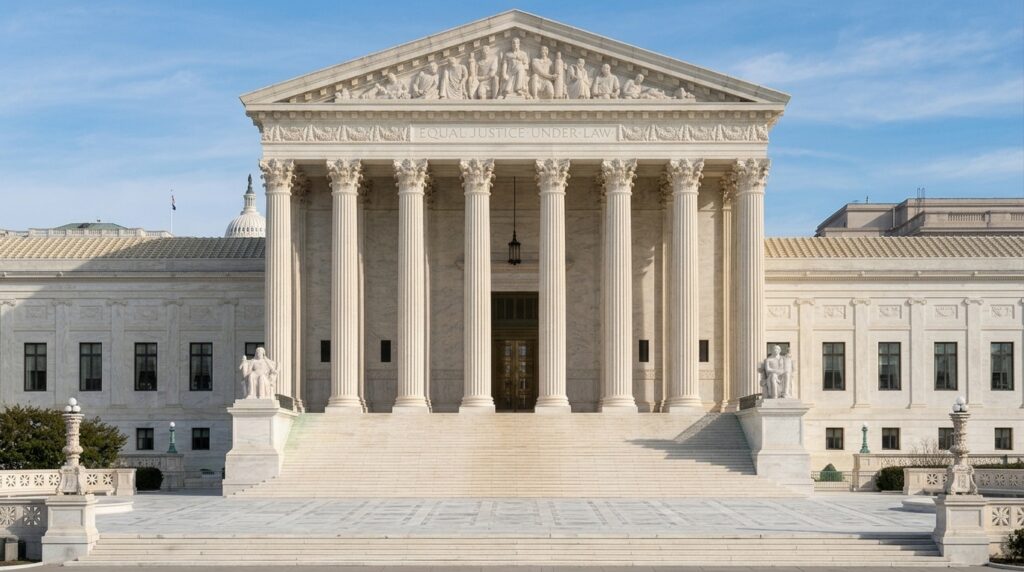

In the News: Danni Iredale at the U.S. Supreme Court in Diaz v. United States
When the U.S. Supreme Court heard argument in Diaz v. United States — a case originating in San Diego with significant implications for how criminal intent may be proven at trial — Partner Danni Iredale was at the petitioner’s counsel table. It was Danni who first represented Delilah Diaz and raised, at trial, the evidentiary issue that would ultimately reach the nation’s highest court.
The case centers on a question that recurs constantly in this border district: whether a law enforcement expert may tell a jury that most drug couriers know they are carrying drugs, or whether such generalized testimony improperly speaks to a specific defendant’s state of mind. The San Diego Union-Tribune reported that the issue reaches to the heart of the “blind mule” defense — and, more broadly, to the limits the Federal Rules of Evidence place on expert testimony about criminal intent, with potential consequences well beyond drug cases.
Reflecting on the experience, Danni described watching arguments she and her colleagues make routinely in the trial courts be taken up and examined by the justices — a meaningful moment, she noted, precisely because the question at issue touches such a large share of the cases handled in this district. She also spoke to the civility of the proceedings, and offered a characteristically clear-eyed read on how the Court might divide: not, in her view, along the usual ideological lines.
That an issue Danni identified and preserved at the trial level was argued before the Supreme Court speaks directly to the firm’s founding conviction — that the most consequential work is done in the courtroom, and that command of the record from the very first motion is what makes the difference.